
October 1, 2026
JUDGE DISMISSES DOJ SUIT AGAINST GEORGIA SEEKING VOTER ROLLS
Yesterday, the suit brought against Georgia by the Department of Justice seeking Georgia’s voter roll data was dismissed. BAEP filed an amicus brief in support of Georgia in March. This latest dismissal marks the 26th case dismissed at the trial court level.
The ruling is below.
September 15, 2026
SUPREME COURT DENIES STAY OF LOWER COURT INJUNCTION
Last night, the Supreme Court denied the USPS request for a stay of a lower court ruling which halted implementation of the USPS new rules on mail-in voting. The Court found “The Government is unlikely to succeed on the merits of its challenge to the District Court’s preliminary injunction. And the equitable factors applicable for obtaining emergency relief from this Court do not favor a stay.”
The opinion is below.
September 9, 2026
BAEP FILES AMICUS BRIEF IN USPS RULE CASE
Today, BAEP filed an amicus curiae brief opposing a requested stay of the lower court ruling that halted implementation of the USPS rule on mail-in ballots. If allowed to proceed, this rule would impact the ability to States to conduct mail-in voting. The brief reflects BAEP’s commitment to Constitutional first principles that support the findings of the lower courts that the injunction is proper:
“If permitted, the Final Rule will cause irreparable public harm for the midterm elections that are already in progress. And fundamentally, it will have profound prospective implications regarding the Constitution’s allocation of authority for administering elections.”
The link to the brief filed by BAEP can be found below.
August 3, 2026
BAEP FILES AMICUS BRIEF ON MAIL-IN VOTING EXECUTIVE ORDER
Today, BAEP filed an amicus curiae brief in opposition to a request for a stay of a lower court injunction of implementation of an Executive Order which, through the rulemaking process it directed, would impact the ability to States to conduct mail-in voting. The request for a stay of the injunction argues that the injunction is premature. The brief reflects BAEP’s commitment to Constitutional first principles that support the findings of the lower courts that the injunction is proper:
“The “wait and see” approach urged by the stay applicants is not an answer to these harms but instead would compound them. With just three months until Election Day and, in some States, less than 60 days until all absentee ballots must be sent to voters, election officials in thousands of jurisdictions would be asked to plan now for two different election-law regimes: the one now in place under their states’ laws, and a radically different one directed by the federal government that would require reprinting election materials, violating state laws, and scrambling to comply with a first-ever national citizenship list for determining voter eligibility. And they would do so under the pressures of potential criminal prosecution or the withholding of vital federal funds, both threatened by the EO.”
The link to the brief filed by BAEP can be found below.
August 24, 2026
BAEP FILES AMICUS BRIEF IN FIRST CIRCUIT APPEAL
Today, BAEP filed an amicus curiae brief in support of Massachusetts in the First Circuit Court of Appeals in Massachusetts’s defense of a lawsuit brought by the United States Department of Justice to obtain its complete, unredacted electronic voter registration data. The brief filed in support of Massachusetts continues to advance the position that the federal government demands for their complete, unredacted voter rolls are not authorized by the 66-year-old civil rights law on which the Department of Justice relies. The brief reflects BAEP’s commitment to Constitutional first principles that support Michigan’s defense:
“The Constitution divides power between the state and federal governments to secure Americans’ liberty. It entrusts States with the primary responsibility for administering elections because state governments are closer to the people and more responsive to their needs. Congress’s Elections Clause authority operates against this backdrop, and courts must read federal election statutes to mean what they say—not stretch them to intrude where Congress did not mean to go. Least of all may the Executive conscript those statutes into a campaign to nationalize elections and topple the state authority the Constitution established.”
The brief filed by BAEP can be found below.
June 24, 2026
SIXTH CIRCUIT AFFIRMS DISTRICT COURT DISMISSAL OF DOJ SUIT SEEKING UNREDACTED MICHIGAN VOTER DATA
Today, the Sixth Circuit Court of Appeals affirmed a lower court ruling dismissing the DOJ suit seeking unredacted voter registration data. The opinion concludes: “Because the government did not comply with its mandatory statutory obligation to submit a demand to Benson containing a statement of both the basis and purpose of its request, Benson did not violate Title III by refusing to produce the unredacted qualified voter file.”
The opinion is below.
April 20, 2026
BAEP FILES AMICUS BRIEF IN SIXTH CIRCUIT APPEAL
Today, BAEP filed an amicus curiae brief in support of Michigan in the Sixth Circuit Court of Appeals in Michigan’s defense of a lawsuit brought by the United States Department of Justice to obtain its complete, unredacted electronic voter registration data. The brief filed in support of Michigan continues to advance the position that the federal government demands for their complete, unredacted voter rolls are not authorized by the 66-year-old civil rights law on which the Department of Justice relies. The brief reflects BAEP’s commitment to Constitutional first principles that support Michigan’s defense:
“The Elections Clause thus operates as “a default provision” that gives States the primary responsibility for administering congressional elections but authorizes Congress to supersede conflicting state laws. Foster v. Love, 522 U.S. 67, 68 (1997). It confers no authority on the Executive to regulate the times, places, or manner of elections.”
The brief filed by BAEP can be found below.
April 9, 2026
JUDGE DISMISSES DOJ SUIT AGAINT MASSACHUSETTS
WGBH Story with link to ruling here:
March 23, 2026
Press Release: VETERAN ELECTION LAWYERS FROM BOTH PARTIES LAUNCH THE BIPARTISAN AMERICAN ELECTION PROJECT TO DEFEND CONSTITUTIONAL PRINCIPLES GOVERNING U.S. ELECTIONS
Organization Files Amicus Briefs Supporting Georgia and Massachusetts Against Federal Government’s Lawsuit to Obtain Their Unredacted Voter Registration Databases
Lawyers affiliated with both the Democratic and Republican parties today announced the formation of the Bipartisan American Election Project (BAEP), a nonpartisan organization dedicated to defending the constitutional principles and democratic norms essential to the conduct of free and fair elections in the United States and to public confidence in the results.
Chief among the principles and norms that BAEP was formed to uphold and defend are the professional, nonpartisan conduct of elections, the testing of outcomes in close races through the procedures provided by state laws, such as recount, contests and litigation, and the acceptance of the results. BAEP will intervene at the federal, state, and local levels through public communications, filings with administrators, and participation in judicial proceedings, including amicus curiae briefs.
Today, BAEP filed amicus curiae briefs in support of the States of Georgia and Massachusetts who are defending lawsuits brought by the United States Department of Justice to obtain their complete, unredacted electronic voter registration data bases.
BAEP is led by Bob Bauer and Ben Ginsberg. Beginning with their 2013 co-chairmanship of the Presidential Commission on Election Administration, Bauer and Ginsberg have collaborated across the partisan divide to support the nonpartisan, professional management of the electoral process. Their work together includes leading Pillars of the Community, which encourages constructive dialogue between state and local community leaders and election officials to build public confidence in nonpartisan administration of voting systems.
BAEP’s work is supported by Board members Dana Remus, former White House Counsel to President Biden, and Donald Verrilli, former Solicitor General of the United States under President Obama, election litigator John Devaney, and by a senior advisory group whose members include election litigator and former Reagan Justice Department official Michael Carvin and former Chief Counsel for the Food and Drug Administration, Daniel Troy, a veteran of the Reagan and George W. Bush administrations. BAEP also retains state and local counsel without regard to party affiliation to represent it in legal filings such as the ones announced today. The organization is led day-to-day by Executive Director Lanny Acosta, Jr., a retired U.S. Army Judge Advocate.
The amicus curiae briefs filed today in support of Georgia and Massachusetts show that the federal government demands for their complete, unredacted voter rolls are not authorized by the 66-year-old civil rights law on which the Department of Justice relies. More fundamentally, BAEP argues for the recognition of constitutional first principles that support each state’s defense:
“The Constitution …. entrusts States with the primary responsibility for administering elections because state governments are closer to the people and more responsive to their needs. Congress’s Elections Clause authority operates against this backdrop, and courts must read federal election statutes to mean what they say—not stretch them to intrude where Congress did not mean to go. Nor may the United States stretch their meaning in an attempt to “nationalize” federal elections.”
The briefs filed by BAEP can be found below.
More news…
electionline: Banning ICE at the Polls
Politico:
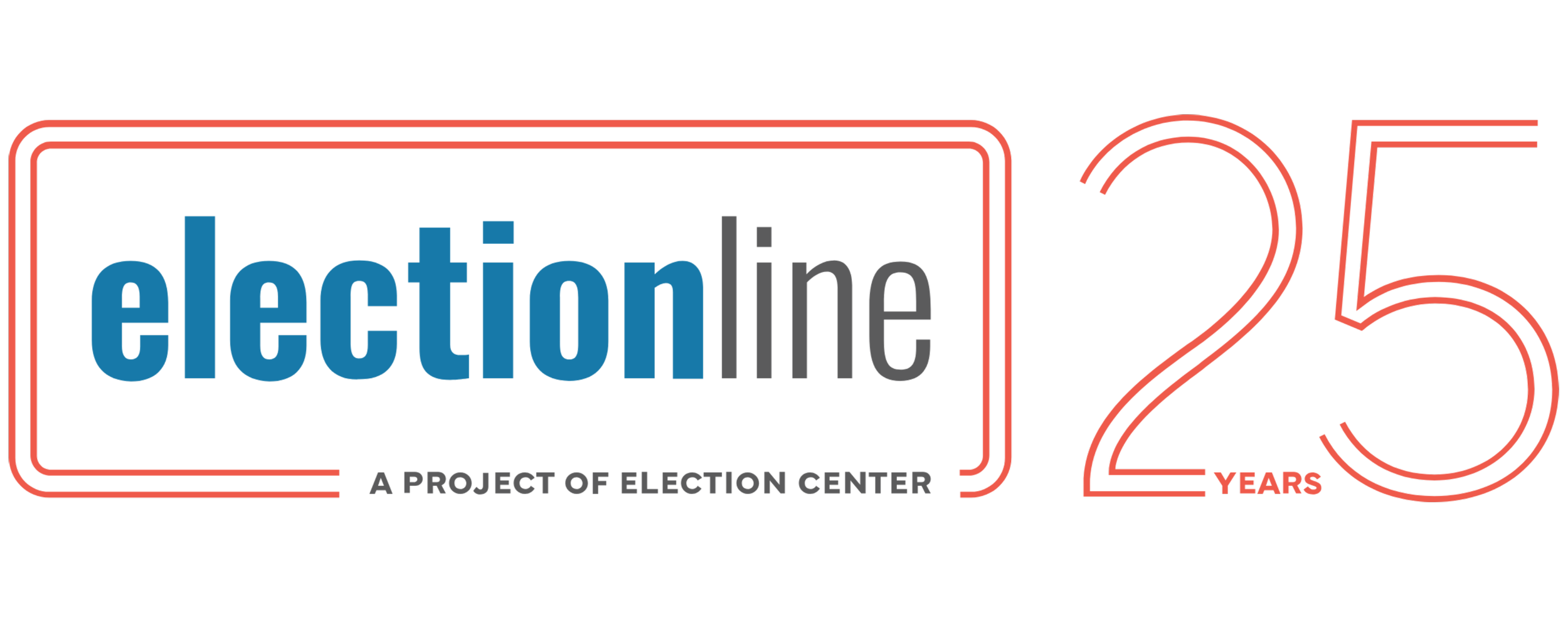
Former political rivals take on Trump’s push to nationalize voting
A pair of former political rivals is teaming up again to fight against President Donald Trump’s effort to impose federal control over state election functions ahead of the midterms.
The Bipartisan American Election Project is the latest effort by Ben Ginsberg and Bob Bauer to advocate for the nonpartisan administration of elections and push back on federal encroachment over an area delegated by the Constitution to the states. …
A Look at Legislation - Banning ICE at the Polls
By M. Mindy Moretti. This is a comprehensive look at rumored discussions about ICE being used at the polls and state legislative actions to address this issue. Click here to read…
Bob Bauer: Trump’s Coming Confrontation with the Courts Over the Elections
From Bob Bauer’s post on his Substack, Executive Functions: In a conflict with the courts over the midterm elections, it is a mistake to assume that Trump would eventually stand down. Click here to read…